
The River-Chapter29
The Answer
By the time Laura reached the pasture, the horse had stopped calling and was watching her approach with the composed expression of an animal who had successfully summoned someone.
Laura checked the gate first. The latch was secure, the fence intact. There was grass enough to occupy a horse for the rest of the afternoon, and nothing in the neighboring field appeared to warrant an announcement. Then she looked in the water trough.
A few inches remained at the bottom. The float had caught against the side, shutting off the supply.
“Well,” Laura said. “You could have mentioned that.”
She freed it, and water began pouring into the trough. The horse moved beside her and lowered her head to drink before it had risen very far. Laura rested her elbows on the fence and waited. Behind the house, her last box sat on the porch, one corner beginning to give way under the weight of the books inside.
She had spent the morning asking a woman at the law school how she might afford to attend. At the time, each question had seemed to require only the next question: when would she hear about aid, which expenses belonged in the estimate, whether students usually shared apartments. Now, with the water running and the horse drinking beside her, she remembered how carefully she had written down the answers.
She had even asked when she should begin looking for a room.
The horse lifted her head, dripping water onto Laura’s shoe.
Laura stepped back. “Thank you.”
Once the trough had filled, she tested the float twice, pushing it down and letting it rise. Then she returned to the porch and carried the damaged box inside with both arms beneath it.
Over the next several days, home settled around her. She learned where her mother now kept the coffee, which cupboard door needed lifting before it would close, and that the back screen door had acquired a squeak no one else appeared to hear. In the mornings she helped with the horse and whatever needed doing outside. Afterward she worked on the forms.
She had expected being home to make the decision simpler. Instead, she found reasons to stay in small, inconvenient places. There was room here to spread her papers without anyone needing the table for something else. She could walk out after supper and be among trees within minutes. Her mother knew when to leave her alone, though she occasionally left a plate beside Laura’s elbow as if feeding someone engrossed in thought required a discreet approach.
Laura could get a job nearby. She had a degree now. There were offices in town, schools, businesses where someone might need a person who could write a decent letter and arrive on time. She looked through the newspaper one afternoon and circled two advertisements.
Both remained on the kitchen table.
The law-school papers traveled with her. She took them upstairs, brought them down again, and carried them onto the porch when the house grew warm. One evening she discovered she had put a list of questions about housing inside a novel she was reading. She had reached for the book intending to think about something else.
Her mother found her there with the book open and the list across her knees.
“Any good?”
“The book?”
Her mother smiled. “I was asking about the book.”
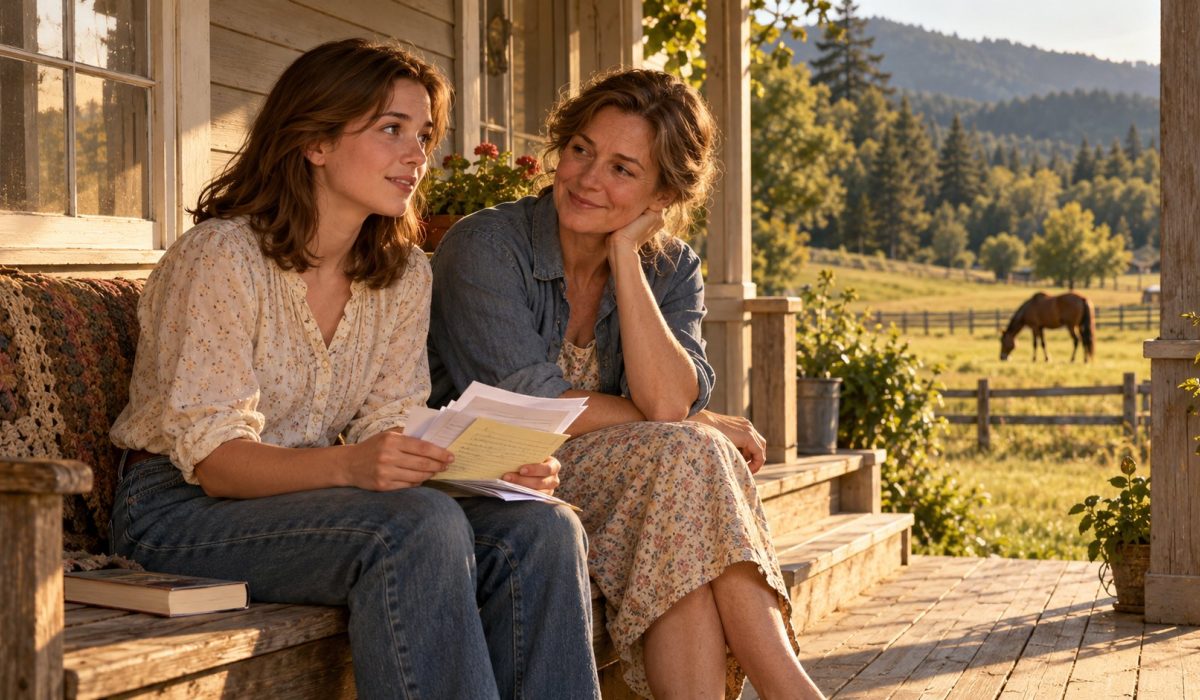
Laura moved the papers aside to make room on the bench. They sat for a while, looking out toward the pasture. The horse was grazing near the far fence, steadily working her way into the shade.
Finally Laura said, “I keep trying to work out whether I’d be any good at it.”
Her mother considered this before answering. “Would they expect you to know that already?”
“I suppose not.”
Laura rubbed a crease in the paper with her thumb. She could imagine doing well in a classroom more easily than she could imagine becoming a lawyer. The latter brought to mind people who spoke without hesitation, who knew when to stand and what to ask. She had never been particularly good at entering a room as if she belonged there. Usually she needed time to learn where things were and who might be kind.
What interested her was less easy to describe. She liked staying with a question after the first answer had begun to seem inadequate. She liked finding the sentence in a book that altered everything she had thought the preceding pages meant. In college, she had sometimes left a class still arguing silently with something said an hour before, impatient to get somewhere she could write it down.
She tried to explain a little of this. Her mother listened without supplying the words.
“And I want to go,” Laura said at last.
Her mother turned toward her, but Laura was looking down at the list.
“I’m frightened about the money. And about getting there and finding out everyone else knows something I don’t.”
“That sounds possible,” her mother said.
Laura looked up, surprised, and then laughed. Her mother laughed too.
After a moment her mother added, “You’ve learned things before.”
They remained on the porch until the shade had crossed the steps. When her mother went inside to start supper, Laura stayed a little longer. She read through the housing questions again, crossing out one the woman on the telephone had already answered.
She completed the acceptance form the following morning.
The page was shorter than she remembered. There was a place for her signature, a date, and instructions about the deposit. She checked the amount against the figure in her notebook, wrote the check, and held it for a moment before placing it in the envelope.
Downstairs, her mother was looking for a jar lid.
“There are six lids here,” she said, “and apparently none of them has ever met this jar.”
Laura found the right one beneath a folded towel. While her mother tried it, Laura put the envelope beside her car keys.
“I’m going to the post office.”
Her mother glanced at the return address. “All right.”
She did not make a ceremony of it, and Laura was grateful, though she found herself lingering at the counter.
“I should be back before lunch.”
“I’ll leave you something.”
At the post office, Laura bought a stamp from a man who asked whether she wanted anything else. She said no, attached it carefully, and dropped the envelope through the slot.
Outside, she stood beside the car searching her bag for the keys. The envelope had been large enough that she could still feel where it had rested against her hand.
On the way home she stopped at the feed store. Her mother had asked her to pick something up, and she had nearly forgotten. The man behind the counter carried the bag out for her and laid it in the trunk beside a stray paperback that had escaped the moving boxes.
When Laura reached the house, her last box was still in the hallway. She carried it upstairs and unpacked the books onto her old shelf. There was not quite room for all of them. She left the others in the box, folded the flaps inward, and slid it beneath the desk.
Posted in the-river by Geoff Stevens