
Walking Away
There is something merciful about memory.
Sometimes it preserves every detail of a moment. At other times, it quietly closes a door that perhaps was never meant to be opened again.
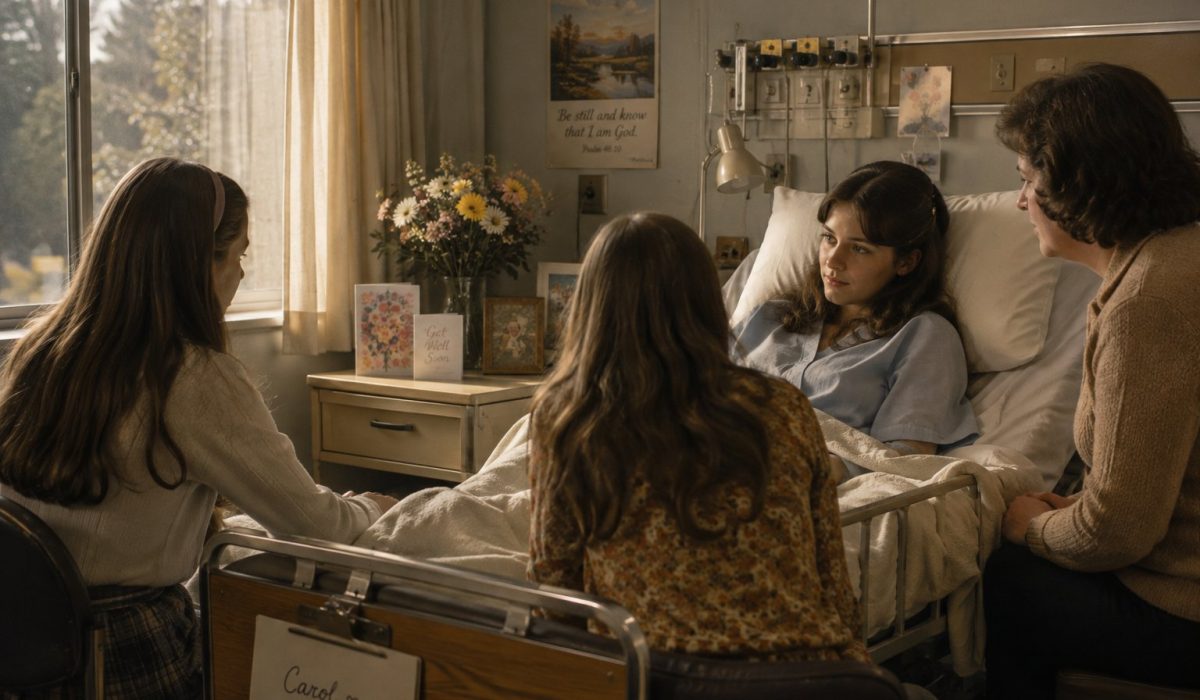
Carol has often wondered about the seventeen days she cannot remember.
The doctors remembered them.
Her family remembered them.
Friends remembered sitting beside a hospital bed, speaking words they could only hope she might somehow hear. Nurses remembered checking her through the long hours of day and night, watching for the smallest sign that she might return. Her mother remembered hearing the doctors prepare her for the possibility that her daughter would never awaken.
Carol remembers none of it.
For her, the darkness has no beginning and no end.
One moment she was a nineteen-year-old riding through the autumn night with two friends in an old Oldsmobile, trying to ignore a feeling she could not explain. The next, she was opening her eyes beneath unfamiliar lights, surrounded by faces that looked relieved and exhausted at the same time. It was as though someone had quietly removed more than two weeks from her life without asking permission.
She did not awaken into celebration.
She awakened into pain.
Every breath reminded her that something inside her had been broken. Turning her head required more effort than seemed possible. Even the simple act of shifting beneath the hospital blankets became a careful negotiation between determination and pain. The doctors explained the injuries one by one, but they sounded strangely distant, almost as though they belonged to another patient whose chart had somehow been placed at the foot of her bed. Broken ribs. A shattered collarbone. A cracked shoulder blade. A crushed spleen. More blood loss than anyone had expected a person to survive.
She listened quietly.
What could she possibly say?
There was no memory to connect those words with. The violence of the collision, the twisting metal, the desperate work of those who pulled the girls from the wreck before the car exploded—all of that belonged to other people's stories. Carol's own story simply stopped on a dark highway and resumed in a hospital room seventeen days later.
In the weeks that followed, recovery became its own kind of work.
The world has a way of celebrating survival while overlooking what comes afterward. People say how fortunate someone is to be alive, and they are right. But surviving is only the beginning. There is still the long business of learning to trust one's own body again. Of discovering that muscles once taken for granted now refuse to cooperate. Of accepting that healing is measured not in dramatic moments but in small victories almost too ordinary to notice.
Carol learned to be patient because she had little choice.
She accepted help when pride would have preferred independence.
She discovered that recovery asks for a different kind of courage than survival itself. Surviving happens in a single terrible moment. Healing asks something of you every day.
Years passed.
The scars softened.
The broken bones mended.
Life slowly reclaimed its familiar rhythm.
Yet the accident never entirely left her, not because of lingering pain, but because of the question that remained behind.
Why had she known?
Long before the Oldsmobile flipped and left the pavement, before headlights filled the rear window, before frightened voices gave way to silence, she had felt an unmistakable certainty that they should not get into that car. She had tried to dismiss it as imagination. She had spoken the warning aloud. Still, the evening unfolded exactly as she had feared.
Most people would have remembered the wreck.
Carol remembered the warning.
Over the years she stopped trying to explain it.
Some experiences resist explanation. They ask only to be remembered honestly.
As she looked back across the decades, the accident gradually became something different from a tragedy narrowly escaped. It became one of the first moments in which she sensed that her life might be held by hands other than her own. She could not prove such a thing. Faith rarely arrives carrying proof. It grows quietly, nourished by moments that seem too meaningful to dismiss and too mysterious to fully understand.
People sometimes told her she must have guardian angels.
She would smile.
Perhaps they were right.
Perhaps there had been someone watching over a frightened nineteen-year-old girl on that lonely Oregon highway.
Or perhaps the greater miracle was not simply that she survived.
Perhaps it was that she awoke with the opportunity to spend the rest of her life discovering why.
Posted in life-stories by Stories Worth Saving