
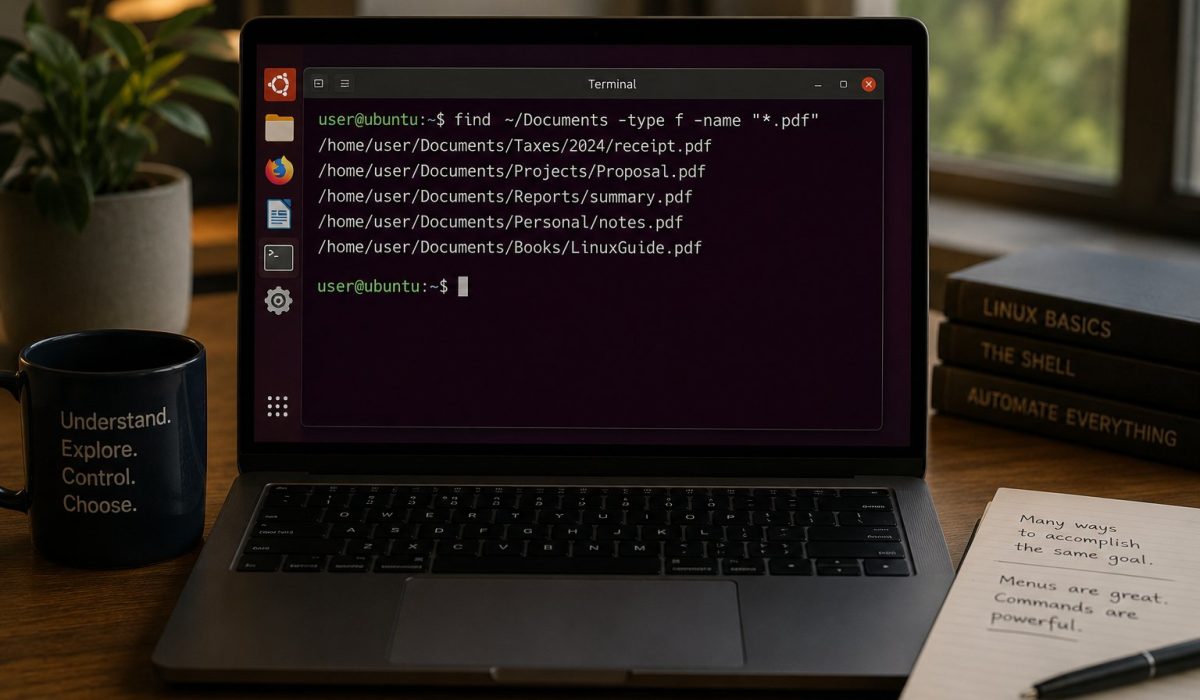
Do You Need to Learn the Command Line to Use Linux?
Before I ever tried Linux, I assumed one thing above all else:
I would need to learn the command line.
That was the image I had built up over the years—people typing commands into a terminal, navigating the system through text instead of menus. It felt technical, unfamiliar, and honestly, a little intimidating.
So when I finally started exploring Linux, that expectation was still there.
But the reality turned out to be different.
You don’t need it to get started
One of the first things I realized was that I could use Linux without touching the command line at all.
I could:
-
browse the web
-
check email
-
write documents
-
manage files
Everything I needed for everyday use was already there, accessible through menus, windows, and familiar tools.
It wasn’t identical to Windows, but it wasn’t difficult to use either.
In fact, after a short adjustment period, it felt… normal.
That was a turning point.
The command line wasn’t the barrier I thought it would be.
But it’s always there
Even though I didn’t need it, I kept noticing the terminal sitting there in the background.
Available, but not required.
And over time, I started to understand something important:
The command line isn’t there because the system is incomplete.
It’s there because it offers another way to interact with the system.
A more direct way.
A different kind of convenience
At first, menus feel easier.
You click, you navigate, you find what you need.
But the command line works differently.
Once you know what you’re doing, you can:
-
perform tasks quickly
-
automate repetitive actions
-
work with precision
It’s not about replacing the graphical interface.
It’s about having another tool available when you need it.
My experience
Coming from years of using Windows, this didn’t come naturally.
I was used to menus, dialogs, and visual navigation.
That’s how I had always interacted with a computer.
So learning the command line felt like learning a new language.
Slow at first.
A little uncomfortable.
And definitely something I wouldn’t have pursued on my own years ago.
What changed
What made the difference for me was timing.
Today, learning something like the command line doesn’t mean doing it alone.
With tools like AI and ChatGPT, I could ask simple questions:
-
“How do I do this?”
-
“What command would I use here?”
-
“Why did this happen?”
Instead of searching through forums or documentation, I could get immediate guidance.
That lowered the barrier enough that I was willing to try.
And once I started, it became less intimidating.
Where it fits
Looking at it now, the command line feels less like a requirement and more like an option.
You can use Linux comfortably without it.
But if you decide to learn it—even a little—it opens up another layer of capability.
Not something you have to master.
Just something you can grow into over time.
A different way to think about it
The biggest shift for me wasn’t learning commands.
It was realizing that I had a choice.
I could stay within the familiar, and everything would still work.
Or I could explore further, at my own pace, and understand more about the system I was using.
That’s what made the command line interesting.
Not because it was necessary.
But because it was there—waiting, if I wanted it.
Posted in perspectives by Geoff Stevens